18th International PCA Forum
Thursday 24 - Tuesday 29 september 2026
Madrid, Spain
MENU
Person-Centered Approach
From September 24th to 29th, 2026
El Escorial – Madrid – Spain
Person-Centered Approach Forums
The 18th International PCA Europe Forum 2026 in El Escorial is part of the rich tradition of the Person-Centered Approach (PCA) Forums, also known as “Enfoque Centrado en la Persona” (ECP).
These Forums are meeting and coexistence spaces for the international community that follows the ideas of Carl Rogers and reflects the principles of the Person-Centered Approach.
What are the objectives of the International PCA Forums?
Based on the values of the Person-Centered Approach, the Forums are a place to share knowledge and personal experiences.
They are held in different cities around the world.
The most recent Forums held were the following:
15th Forum in 2019, Dourdan, France;
16th Forum in 2022, Rome, Italy;
17th Forum in 2024, Tangier, Morocco.
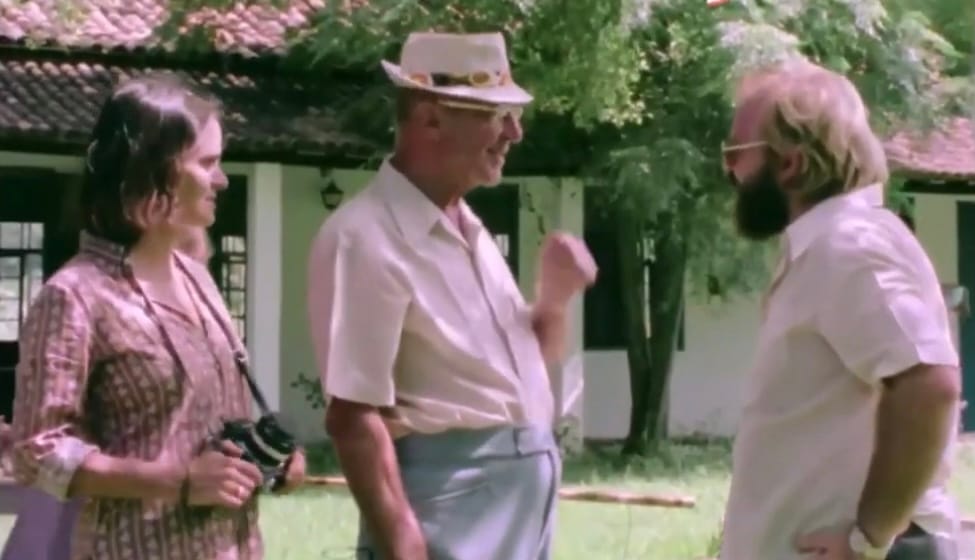
Images captured from the documentary “Carl Rogers: On Personal Power” (1977), filmed in Brazil.
Here we see Carl Rogers conversing with colleagues and participants at the gathering.
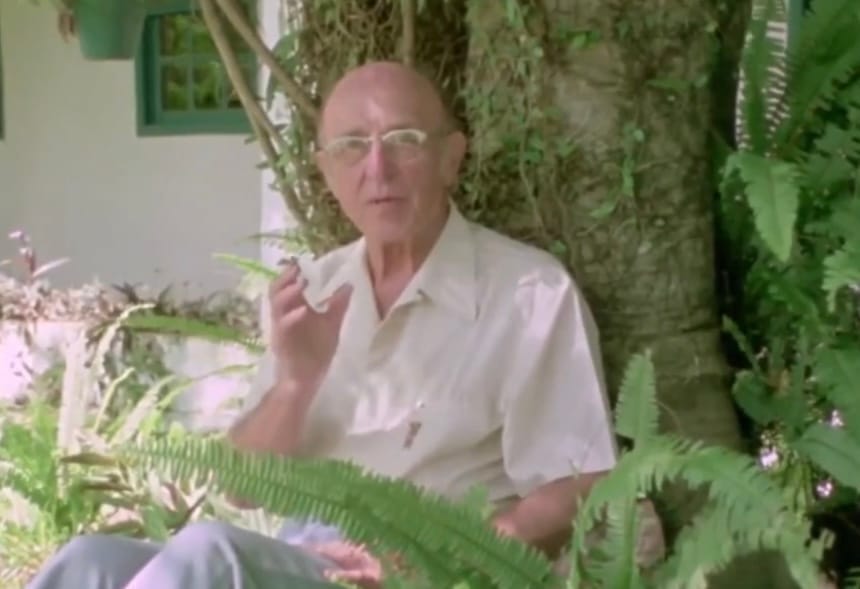
Images captured from the documentary “Carl Rogers: On Personal Power” (1977), filmed in Brazil.
Here Rogers is seen sitting and speaking directly to the camera, as part of the interviews and personal reflections included in the documentary.
Journal of Humanistic Psychology, vol. 22, no. 4, pp. 9–20
Carl Rogers (1982) analyzes nuclear war, its threat and its possible prevention:
“Thus, the workshop in El Escorial, near Madrid, ( 1979 ) brought together 170 people from 22 different nationalities—Marxists and capitalists, priests and atheists, young and old—for a period of ten days. Although national and ethnic tensions, and above all the hostility towards “American imperialism,” were noticeable, over time, under the influence of a facilitating climate, the participants began to listen to each other, and then, little by little, to understand and respect each other. Gradually, the group was transformed, in every sense of the word, into a harmonious community. This does not mean, by any stretch, that all points of view merged, but that each person, in their personality and difference, in the diversity of their opinions and convictions, was understood, appreciated, and respected, and strengthened in their ability to take personal risks and to engage in constructive social practices.”

History of the International Forums of the Person-Centered Approach
As told by Alberto Segrera
The International Forums were first presented in those years when neither the internet nor WhatsApp existed. At that time, there was not much literature available on the Person-Centered Approach and the Humanistic School.
Alberto Segrera decided to organize the first International Person-Centered Approach Forum in Mexico, his city of residence. He sought the support of Carl Rogers, visiting him on January 1st at his home in California, USA. It was there that he proposed bringing together people who had worked and produced material on the person-centered approach. At that time, they considered calling them “Encounters,” but they evolved because “encounter” might limit the event to just one form of work, namely the small group focused on personal issues.
Finally, they chose the word FORUM—inspired by the Roman and Greek Forum—as an open space for other matters, both personal and social. They did not limit themselves to the personal, but included it in a space that also allowed for discussion of social issues and topics of interest to the group.
Segrera wanted to create a place, a space where everyone would be equal and where there would be no need for a group or committee to generate proposals that everyone else would simply follow. In other words, he wanted to create a democratic community to the point where everyone would participate in proposing how to live and organize that shared space.

Then Segrera met with Carl Rogers two or three times, and after sending the written project, they agreed on the organization of that first International Forum.
At the time, they said that they would have to find people who belonged to the Person-Centered Approach way of thinking and who lived in different parts of the world.
They changed the old concept of “Staff,” which was used in gatherings mostly in the United States, to the concept of the Organizing Committee.
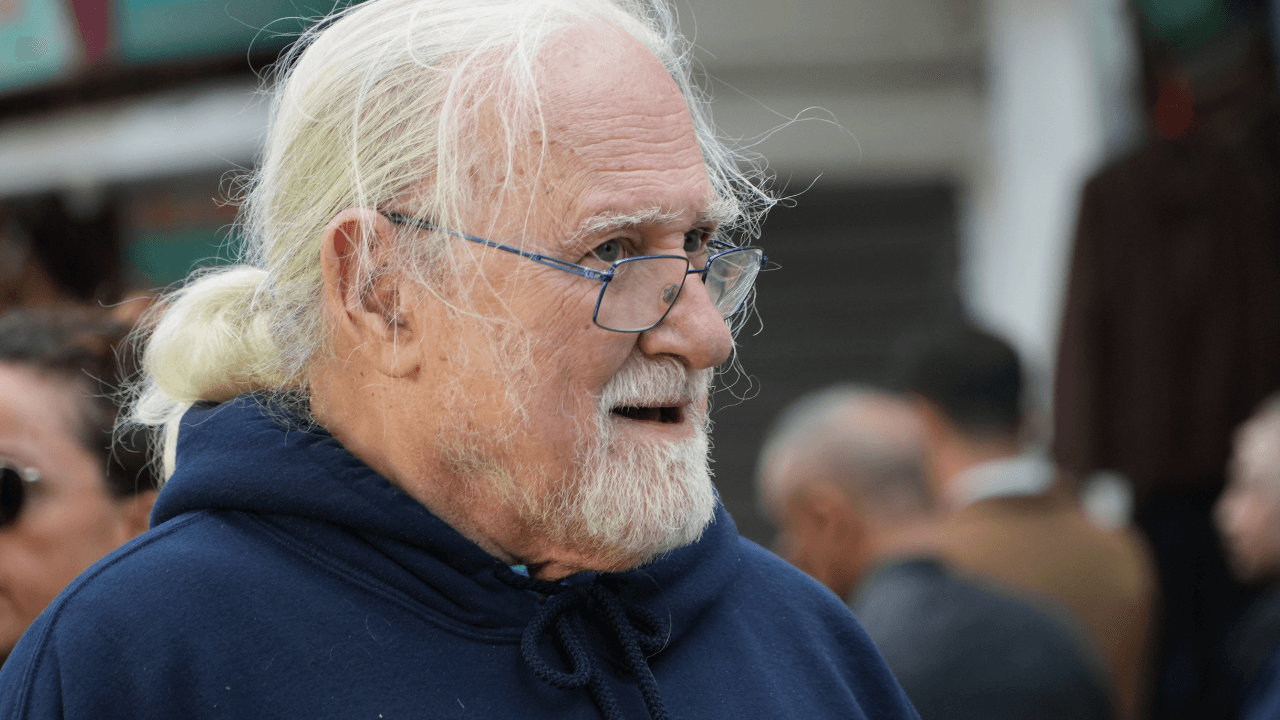
At that time, when the First International Forum was organized in 1982 in Mexico, Alberto Segrera was 38 years old.
When the committee for the first forum was created, all those contacts who had been gathering and who were related to the Person-Centered Approach were asked to provide names and addresses of people they knew who were practicing their profession from this Approach, and they were invited on the condition that they present a written paper—otherwise, they would not be admitted.
About eighty participants presented a written paper. Natalie Rogers, who was on the Organizing Committee of this first international forum, also presented a paper that was, in fact, the beginning of her later production and trajectory in Expressive Arts from the Person-Centered Approach.
The format of this forum was seven full days and seven nights. The cost of that first forum was $250 for accommodation and $100 as a contribution to expenses.
The location chosen for that first forum was not as elegant as is customary today for organizing forums; it took place in facilities belonging to the Social Security Institute.
They chose a building that had a central hall and corridors on the sides, as well as bathrooms to be shared by all present. The facilities were very basic, but they wanted to make access to participation as easy as possible.
Everyone was someone who had contributed, and some were direct students of Rogers in Ohio, United States. Many people who came from Chicago had never participated in such a large group activity.
Large group activities are an invention of the Person-Centered Approach from La Jolla, California, and not from Chicago.
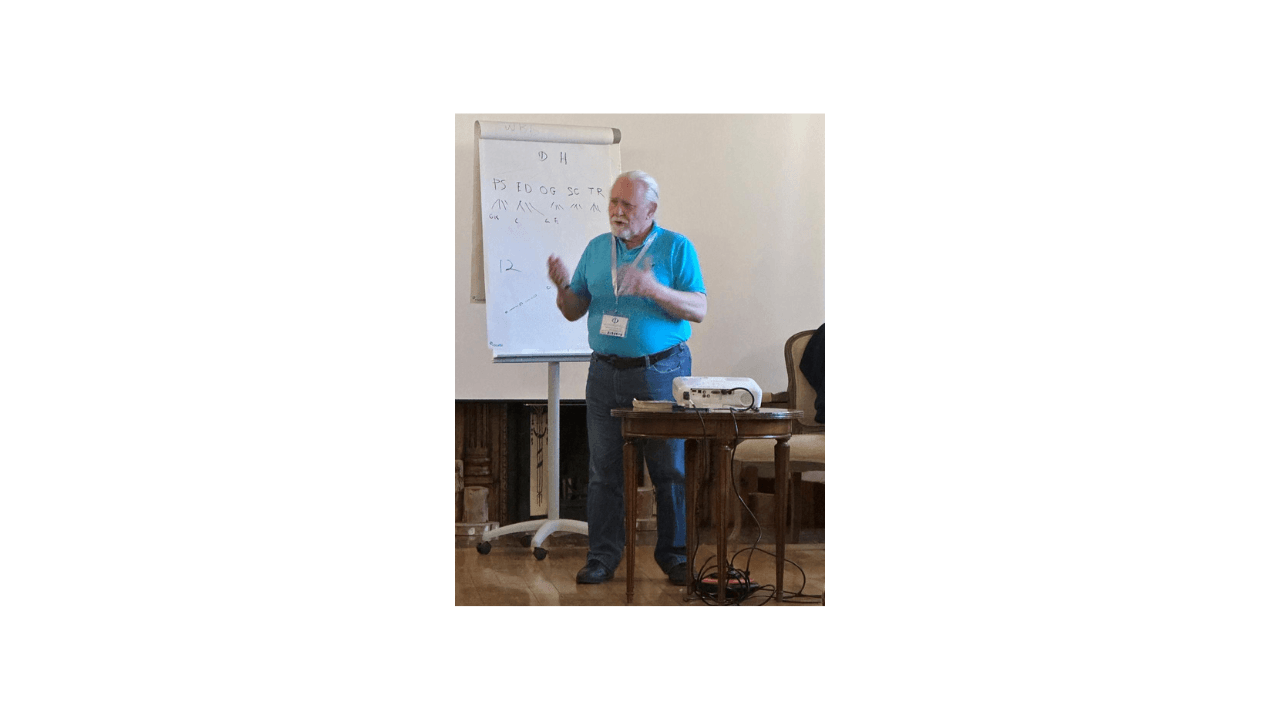
For two days, the group discussed whether or not it was possible to take photos, for example, due to privacy concerns and potential intimidation for the group. Finally, on the third day, a disciple of Carl Rogers arrived with a complete filming setup, and everyone started laughing—the discussion was over.
Over time, there have been various developments: communications are now much easier. One of the most significant differences is that now everything can be shared—photos, messages, videos—via WhatsApp.
Every day, we had community meetings at that and other Forums, where personal, individual issues could be addressed, but also the needs of the group. This is a distinction, because it is not the same as an encounter group. It has common elements and similarities, but it is not the same as an encounter group.
Changes that occurred over time
They discussed allowing people who were studying the Approach to participate, and this somewhat changed the organization, since those taking part were no longer just a group of experts. This change brought both positive and negative aspects, because in the International Forums that gave rise to the Latin American Encounters and the National Forums, competitions sometimes arose in which teachers and especially their students defended their own teachers in the groups and opposed the teacher from another group. The discussion often revolved around seeing which group and which teacher was the most powerful and the wisest within the large group.
This documentary was filmed during a visit by Carl Rogers to an international gathering at a therapeutic community called the “Instituto Núcleos” or “Center for the Development of Human Potential,” near Petrópolis, Brazil, in the 1970s. Rogers traveled there in the context of his work with encounter groups and person-centered psychotherapy.
Organizing Institutions

Partner Institutions







@ Produced by the PCA 2026 International Forum, Madrid – Spain
